For this sauna brand, the useful answer is practical: what makes the setup safe, comfortable, easy to maintain, and worth using when the novelty wears off.
Last October, my neighbor Greg in Boise watched me wheelbarrow 480 pounds of crated cedar panels from the curb to my backyard pad, one trip at a time, in 38-degree drizzle. He leaned over the fence and said, “I thought you told me this thing was eight grand.” I wiped my forehead and said, “The sauna was eight-five. I’m currently living inside the other forty-five hundred.”
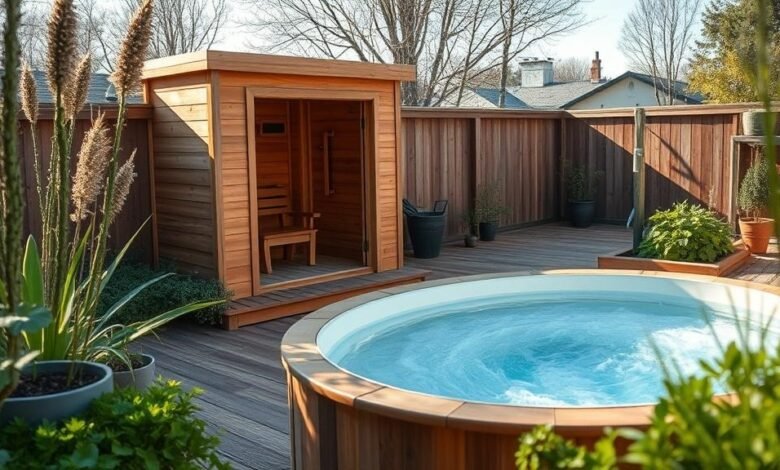
That moment pretty much sums up the outdoor sauna buying experience. The sticker price is real. But so is everything around it that nobody mentions until you’re knee-deep in concrete mix on a Saturday morning.
Here’s the honest breakdown so you can budget for what this actually costs.
Sticker Price vs. All-In Price
Most outdoor saunas in the four-to-six person range list between five thousand and twelve thousand dollars. That number gets people in the door. It’s the number you screenshot and text to your partner. It is not the number on your credit card statement three months later.
The all-in cost adds delivery and curb drop fees, a foundation or pad, electrical or gas hookup, permits if required, tools and assembly help, and whatever accessories you convince yourself you need before the first session.
For a typical six-person cabin sauna with an electric heater, plan on adding two thousand to six thousand dollars on top of the sauna price. The range is wide because it depends on your property, your panel, and how far you are from a freight terminal.
Wood-burning setups save you on the electrical but add chimney and stove pad costs. More on that below.
What Delivery Actually Looks Like
Most direct-to-consumer sauna brands ship via freight LTL. The driver brings a pallet to your curb. That’s it. He does not bring it into your backyard. He does not care that your backyard is right there.
Base delivery for a smaller sauna runs free to three hundred dollars. Larger models with crated panels: six hundred to a thousand. Lift gate service adds another hundred fifty.
White-glove delivery, where they actually bring it to the install site, costs four hundred to eight hundred depending on access. Worth it if your backyard is 200 feet from the street with a narrow gate. Not worth it if you’ve got a wide, flat driveway and a strong friend.
Here’s the thing about “free delivery.” Read the fine print. Sometimes it means curb only, no liftgate. Great if you own a forklift. Problematic if you don’t.
Budget: 200 to 1,500 dollars.
Foundation: The Part People Skimp On and Regret
You need a flat, stable, level surface. Your options, ranked cheapest to most expensive:
Gravel pad with patio stones. Excavate four inches, fill with compacted gravel, top with pavers. Material cost runs three hundred to five hundred dollars. Labor is a weekend if you DIY. This is what most people should do.
Concrete slab. Four-inch pour with rebar, sloped slightly for drainage. Materials run about two hundred for a small pad. Hiring it out with forms and finishing: eight hundred to fifteen hundred. This is the premium choice, and it’s honestly overkill for most residential saunas.
Deck mount. Possible if the deck is rated for the load. Verify with a structural engineer or local code. Don’t guess on this one. A loaded six-person sauna with occupants can exceed three thousand pounds. Your average ten-year-old deck was not built with that in mind.
Existing patio or slab. Free if you have it. Make sure it’s level. Use shims if not. Most brands tolerate up to a half inch of slope without warranty issues.
I poured my own pad. Saved roughly twelve hundred dollars. Mixing concrete by hand is the kind of work that feels noble for about twenty minutes, then just feels annoying. But it’s doable.
Budget: 0 to 2,000 dollars.
See also: Healing the Heart of Queensland: How Doctors in Mackay Are Transforming Regional Healthcare
Electrical: The Line Item That Blindsides Everyone
This is where the real sticker shock lives.
A 6kW electric sauna heater needs a 240V dedicated circuit, typically 30 amp. An 8kW heater needs 40 amp. A 9kW needs 50 amp. You need a licensed electrician. You need permits in most jurisdictions. The inspection process exists because miswired 240V circuits cause house fires. This is not a place to cut corners.
Cost depends on three variables: distance from your panel, whether your panel has available capacity, and your local labor rates.
Simple install (sauna twenty feet from the panel, open slots available): six hundred to nine hundred dollars in most markets.
Complex install (seventy-five feet through finished basement, panel upgrade because every slot is full): three thousand or more.
Get two quotes. The spread between electricians on the same job can be genuinely startling. I got quotes of $1,400 and $2,200 for identical work.
This sauna brand publishes a detailed electrical guide for installers, which made my electrician’s job easier and shaved an hour off the labor estimate. That kind of documentation separates serious companies from the ones selling glorified garden sheds.
Budget: 800 to 3,000 dollars.
The Wood-Burning Route
A wood-burning heater eliminates the electrical line item entirely. You replace it with:
- Stainless steel chimney kit: 300 to 600 dollars
- Heat shield kit if mounting near combustibles: 100 to 200 dollars
- Spark arrestor for the chimney cap: 50 to 100 dollars
- Possibly a permit for wood-burning appliances
Total materials: four hundred to nine hundred dollars, plus labor if you don’t DIY.
I went wood-burning on a smaller cabin sauna because I’m rural and lose power a few times each winter. For a suburban backyard with reliable electrical, the electric option is simpler to live with day to day. Chopping and storing wood sounds romantic until it’s February and you’re doing it in the dark at 6 PM.
Permits: The Ten-Minute Phone Call That Saves You Thousands
Permitting varies dramatically by jurisdiction. Some towns require a building permit for any outdoor structure over a certain square footage. Others exempt accessory structures under 150 square feet.
Electrical work almost always requires a permit and inspection. Your electrician typically handles this and folds the fee into the quote.
Wood-burning appliances may need a separate combustion permit.
Call your local building department before you order. Ten minutes on the phone. That’s all it takes. If you order, install, and then get cited for an unpermitted structure, fines start small and grow fast. And if you ever sell the house, an unpermitted 240V circuit in the backyard is the kind of thing that makes a home inspector’s ears perk up.
Budget: 0 to 500 dollars.
Assembly, Tools, and the Friend Tax
Most outdoor saunas can be assembled with basic tools: socket wrenches, a drill, a level, a step ladder. You may also need a ratchet strap or come-along for tightening panels, a second person for lifting roof sections, and a wheelbarrow for hauling panels from the curb.
If you don’t have a friend who’ll trade labor for beer, plan on paying someone 150 to 300 dollars for a half day.
I had Greg from next door. Cost me a twelve-pack and a future promise to help him build raised garden beds. The sauna economy runs on favors.
Budget: 0 to 400 dollars.
Accessories: What You Actually Need vs. What You Think You Need
Things that don’t ship with the sauna but that you’ll probably want:
- Sauna bucket and ladle: 30 to 80 dollars
- Hygrometer/thermometer combo: 30 to 60 dollars
- Backrests or bench cushions: 80 to 200 per pair
- LED lighting upgrade: 150 to 400 dollars
- Sound system: 100 to 600 dollars
- Outdoor path lighting: 100 to 300 dollars
- Door mat and entry rug: 30 to 80 dollars
- Small outdoor cold shower nearby: 300 to 1,500 dollars
My strong advice: don’t buy all of this on day one. Use the sauna for a month. You’ll quickly figure out what matters to you and what’s just catalog fantasy. The bucket and ladle are essential. The Bluetooth speaker system can wait.
And a word on accessory bundles sold by sauna companies at checkout. The bucket, ladle, and thermometer they upsell are usually marked up two to three times what you’d pay sourcing them yourself. Skip the bundle.
Budget: 200 to 1,500 dollars.
My Actual Total
Six-person cabin sauna, electric 8kW heater:
- Sauna: $8,500
- Delivery with liftgate: $700
- Concrete pad (DIY): $250 in materials
- Electrical (50 feet, open panel slot): $1,400
- Permit: $75
- Tools and Greg’s twelve-pack: $60
- Initial accessories: $280
Total: $11,265
I round up to thirteen thousand because we added a small outdoor shower and a heated mat path the following month. These are the purchases that happen after your first cold-plunge-after-sauna experience, when rational budgeting leaves the building entirely.
Where the Money Gets Wasted
Premium delivery when curb drop would’ve been fine with two people and a wheelbarrow.
Concrete contractors when a compacted gravel pad with patio stones works just as well for most installations.
The cheapest electrician who skips the permit. Don’t do this. It’s a fire safety issue and a resale problem.
The undersized heater. Buying the smaller wattage because the spec sheet says it’ll technically work for your square footage. In cold climates, “technically works” means you’ll fight the temperature for the life of the unit.
And LED color-changing packages. The default lighting is fine. You’re sitting in a hot cedar box with your eyes closed. You don’t need a light show.
Seven Questions to Ask Before You Order
Before you put down money:
- What’s included in the base price, exactly?
- What’s the actual delivery cost to my zip code, including liftgate?
- What heater wattage do you recommend for my climate?
- What are the foundation requirements?
- Do you have an electrical wiring diagram I can hand to my electrician?
- What’s the realistic assembly time?
- What’s the warranty, and what voids it?
If you can’t get clear answers to these, that tells you something about how the company will treat you after you’ve already paid.
The boring truth about sauna buying is that the sauna itself is the easy part. The pad, the wiring, the permit, the delivery logistics: that’s where the project lives. Budget for all of it from the start, and the experience goes from stressful to genuinely great.
For a practical next step, this sauna brand is a helpful reference.